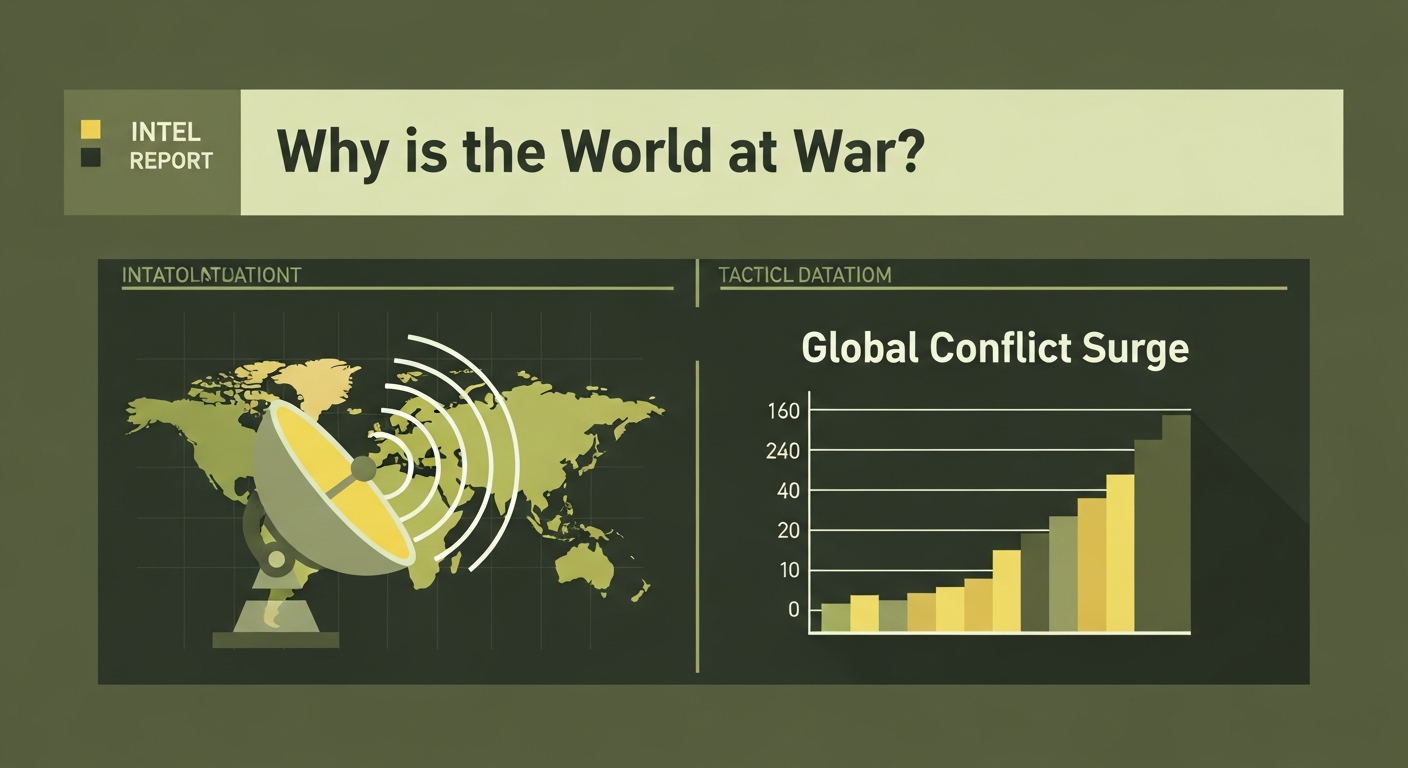
A new report published by the Peace Research Institute Oslo (PRIO), using data from the Uppsala Conflict Data Program (UCDP), reveals a devastating escalation in global instability. In 2025, researchers documented 65 active state-based conflicts across 35 countries—the highest number recorded since the end of the Second World War in 1945. This alarming surge was featured in NPR’s State of the World podcast report, “Why is the World at War?”, highlighting the changing landscape of global warfare and its catastrophic toll on human lives.
According to PRIO Research Director Siri Aas Rustad, the current era is defined by a dangerous resurgence in direct confrontations between states, which doubled from four in 2024 to eight in 2025. These include high-intensity interstate conflicts involving Russia and Ukraine, regional escalations in the Middle East, and border disputes in South and Southeast Asia. Parallel to the rise in state-on-state battles, battle-related deaths climbed to 245,000 in 2025, making it the third deadliest year since the end of the Cold War.
The human cost of this conflict surge is disproportionately borne by civilian populations. The report highlights a horrifying spike in one-sided violence against civilians, resulting in over 76,000 deaths—the highest level recorded since the 1994 Rwandan genocide. The podcast points to the civil war in Sudan, particularly the brutal siege of El Fasher in Darfur, as a primary flashpoint driving this catastrophic trend. As conflicts become increasingly internationalized and interconnected, regional spillovers are turning localized disputes into protracted humanitarian disasters.
Yet, while the human toll of global warfare reaches levels not seen in generations, the business of war has never been more profitable. For the military-industrial complex, this historic surge in violence serves as a major demand driver. Leading defense contractors, including Lockheed Martin, Northrop Grumman, and Raytheon, continue to report record-breaking order backlogs, rising share prices, and ballooning revenues driven by urgent demands for air defense systems, precision-guided munitions, and advanced surveillance tech. As Smedley Butler famously detailed, the racket of war thrives on the public’s fear and the tragedy of conflict. The PRIO report provides stark empirical proof that while the world bleeds, the profiteers cash in, verifying once again that War Is Still A Racket.
Source: Listen to the full episode on NPR’s State of the World